
Recording an acoustic guitar in a professional studio is a combination of proper instrument preparation, microphone selection, microphone placement, room acoustics, and skilled recording techniques. The objective is to capture the guitar’s natural tone, dynamics, and character while minimizing unwanted noise and reflections. A well-recorded acoustic guitar provides clarity, warmth, and depth, making it suitable for solo performances or full music productions.
Recording Process
Firstly, choose an acoustically treated recording room. Eliminate external noises such as fans, air conditioners, or traffic. Position the performer away from reflective surfaces if possible. And chose the write microphone for recording.
Ways to properly mic the Acoustic Guitar
Placing a single small or large-diaphragm condenser microphone about 6 to 12 inches (15–30 cm) away from the 12th Fret, angled slightly toward the body, this captures the crisp attack of the strings and the woodwork resonance to get a balanced tone with clarity, also bypassing the boomy sound hole. Large-Diaphragm Condenser (LDC) produces a warm & full sound, whereas Small-Diaphragm Condenser (SDC) captures detailed high frequencies & a natural tone
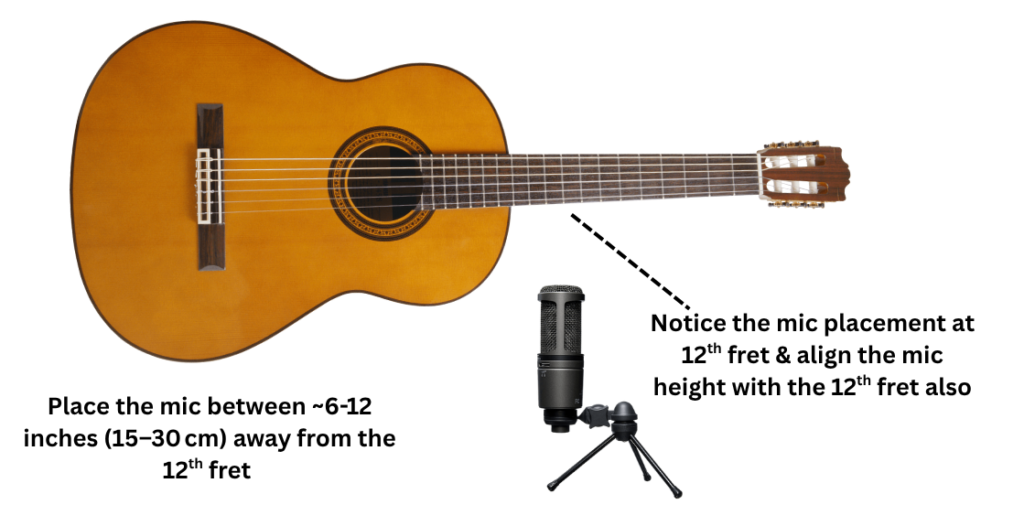
Place near the Sound Hole: Gives more bass & body sound. Avoid placing the mic directly in front of the sound hole to prevent a boomy sound. Place near bridge Position: Produces a brighter & sharper sound.
The Over-the-Shoulder: Place a directional mic just over the player’s right shoulder (for a right-handed player), pointing down at the body of the guitar. This captures the instrument exactly how the guitarist hears it.
Stereo Miking Recording Techniques
Stereo miking uses two microphones to capture a sound source, creating a sense of width, more natural sound with depth and ambience. In a mix, it allows an instrument to occupy a wide left-to-right stereo field rather than being trapped in a single, narrow point (mono). It is commonly used for acoustic guitar, ensembles, and room recordings. When choosing a stereo technique, your two main variables are Phase Coherence (how well the signals combine without canceling each other out) and Stereo Width (how wide the left and right channels feel).
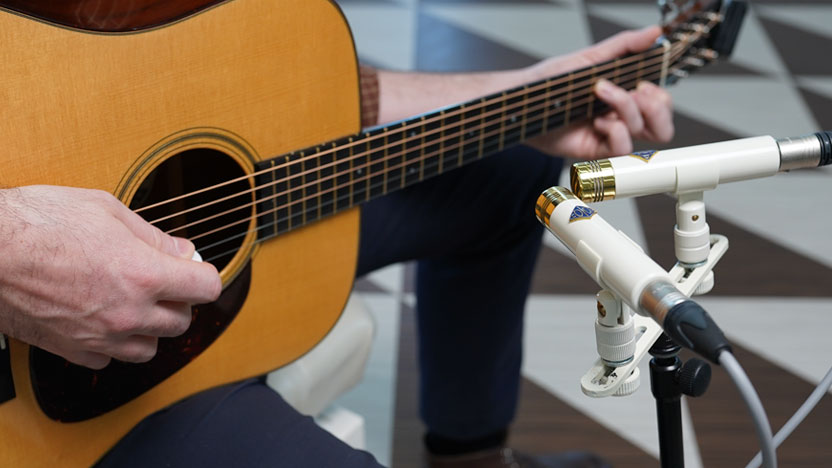
XY Technique
- Two identical cardioid microphones.
- Capsules placed as close together as possible.
- Angle of 90° between microphones.
- Position about 6–12 inches (15–30 cm) from the guitar, aimed at the 12th fret
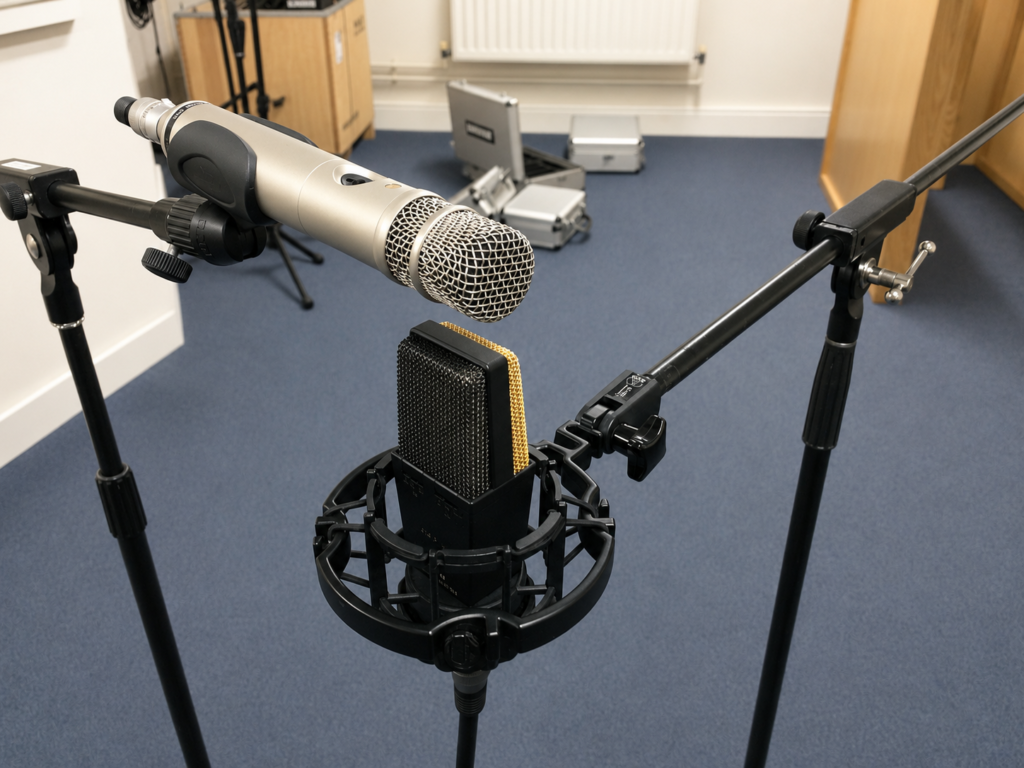
Mid-Side (M/S) Technique
- One cardioid microphone (Mid) aimed directly at the guitars 12th fret.
- One figure-8 microphone (Side) placed at a 90° angle to the Mid microphone.
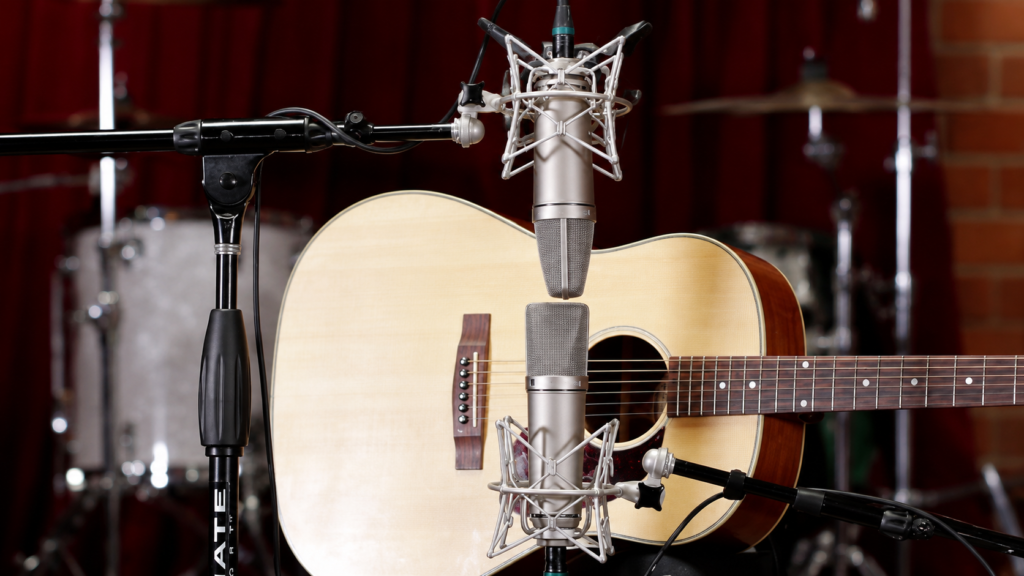
Blumlein Pair Technique
- Two figure-8 microphones.
- Capsules placed together.
- Microphones angled 90° to each other.
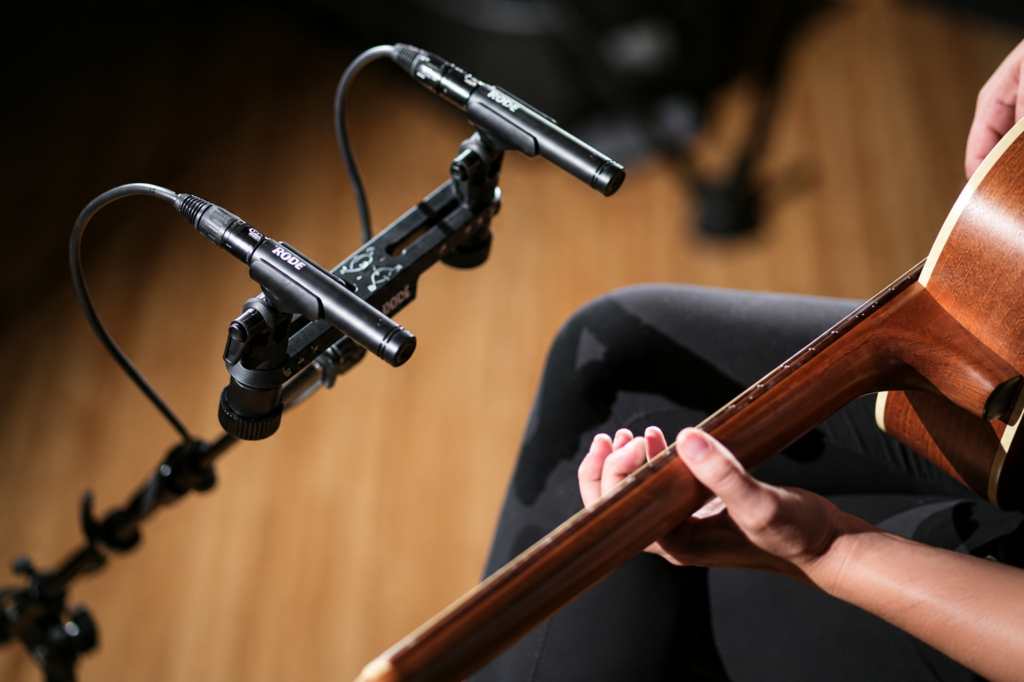
Spaced Pair Technique
The Spaced Pair technique trades phase safety for massive, dramatic stereo width. It is commonly used for drum overheads, acoustic pianos, and large choirs.
- Two microphones placed 30–60 cm (12–24 inches) apart.
- One microphone points toward the 12th fret.
- The second microphone points toward the 5th fret.
Set Recording Levels
- Set the preamp gain correctly.
- Avoid clipping (digital distortion).
- Maintain recording peaks around –12 dB to –6 dB.
- Leave sufficient headroom for mixing.
Conclusion
Professional acoustic guitar recording combines excellent musicianship, proper studio acoustics, suitable microphone selection, careful microphone placement, and thoughtful post-production. Attention to each stage of the recording process ensures a clean, balanced, and expressive recording that faithfully captures the instrument’s natural tone and emotion.
Looking to build a career in Sound Engineering & Music Production ? Join Soundpoint Pro, Chennai, and get practical, industry-oriented training designed to develop your technical knowledge and creative skills.
Learn the complete audio production workflow—from recording and microphone techniques to mixing, mastering, music programming and studio production. Gain hands-on experience with professional audio equipment, recording software and modern music production techniques.
Sound Engineering Course in Chennai, Music Production Course in Chennai, Sound Engineering Institute in Chennai, Music Production Institute in Chennai, Audio Engineering Course, Audio Production Course, Recording Engineering Course, Studio Recording Course, Mixing and Mastering Course, Live Sound Engineering Course, Music Production Training, Sound Engineering Training, Audio Engineering Training, Music Production Classes, Sound Engineering Classes, Sound Design Course, Foley Recording Course, Sound Effects Course, Pro Tools Training, Music Programming Course, EDM Production Course, Professional Sound Engineering Course, Best Sound Engineering Institute in Chennai, Best Music Production Institute in Chennai, Sound Engineer Course Chennai, Music Producer Course Chennai.